
Peace can feel elusive in today’s world. News headlines, financial pressures, health concerns, broken relationships, and uncertainty about the future often leave us anxious and restless. Yet throughout Scripture, God repeatedly reveals Himself as the One who brings lasting peace—not merely the absence of conflict, but a deep, abiding wholeness that steadies the heart.
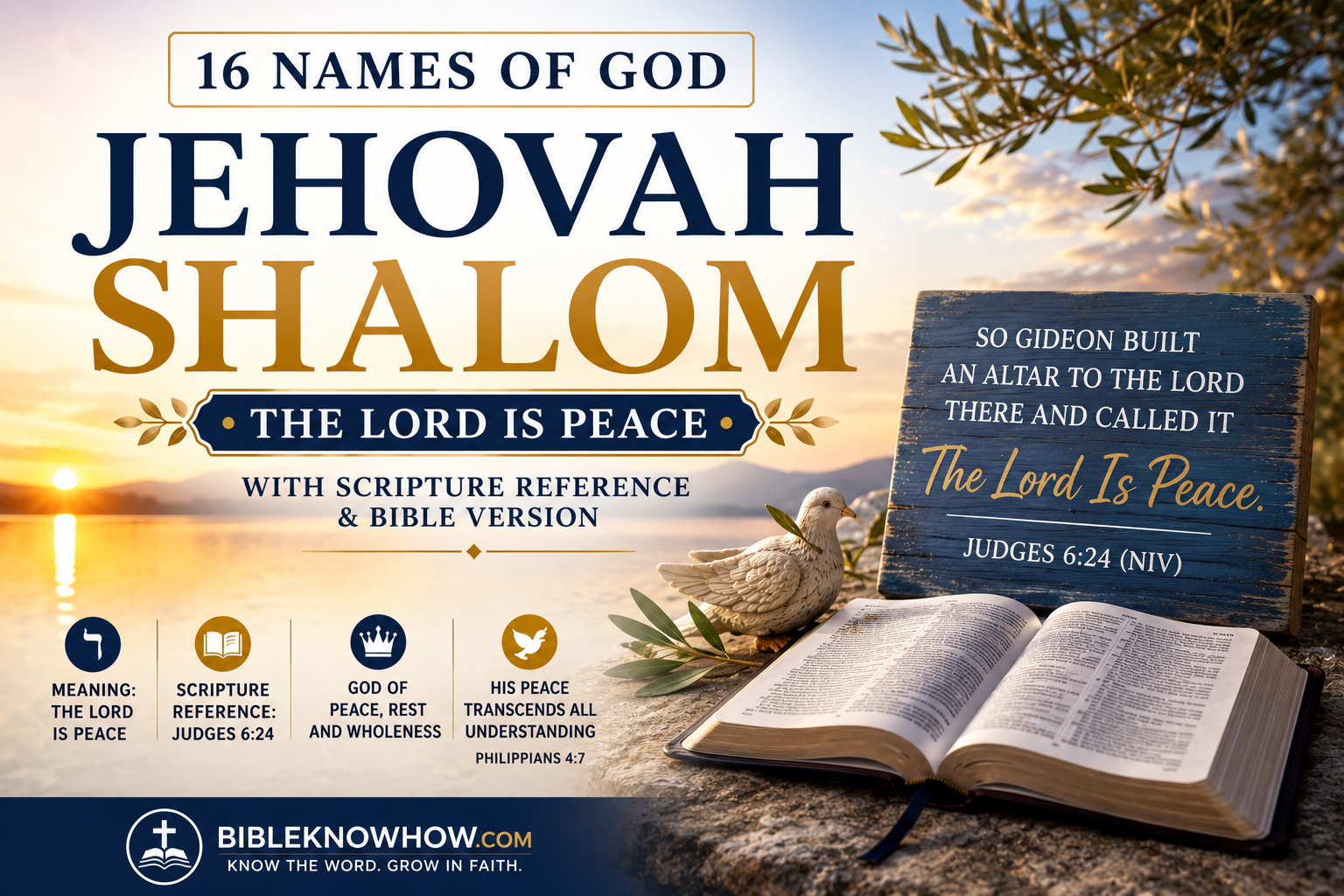
One of the clearest expressions of this truth is found in the name Jehovah Shalom, which means “The Lord Is Peace.” This divine name reminds believers that true peace is not found in favorable circumstances but in God’s presence and character.
The name first appears in the Old Testament during one of Israel’s darkest periods. God revealed Himself as Jehovah Shalom to reassure a fearful man named Gideon that He was with him. That same message continues to encourage Christians today: God’s peace is available even when life feels uncertain.
In this study, we’ll explore the meaning of Jehovah Shalom, where it appears in the Bible, its Hebrew background, related Scripture references, and practical ways this beautiful name can strengthen your faith.
Read Also: 15 Characteristics of God’s Love According to the Bible
What Does Jehovah Shalom Mean?
Jehovah Shalom (Hebrew: YHWH Shalom) literally means:
“The LORD Is Peace.”
The Hebrew word shalom carries a much richer meaning than the English word peace. It includes ideas such as:
- Wholeness
- Completeness
- Well-being
- Harmony
- Security
- Prosperity
- Rest
- Reconciliation
Biblical peace is more than a calm feeling. It is the confidence that comes from living under God’s care and favor.
Scripture Reference
The name Jehovah Shalom first appears in:
Judges 6:24 (New International Version – NIV)
“So Gideon built an altar to the LORD there and called it The LORD Is Peace. To this day it stands in Ophrah of the Abiezrites.”
Other Bible Versions
King James Version (KJV)
“Then Gideon built an altar there unto the LORD, and called it Jehovah-shalom…”
English Standard Version (ESV)
“Then Gideon built an altar there to the LORD and called it, The LORD Is Peace.”
New King James Version (NKJV)
“So Gideon built an altar there to the LORD, and called it The-LORD-Is-Peace.”
Christian Standard Bible (CSB)
“So Gideon built an altar to the LORD there and called it, The LORD Is Peace.”
The Historical Background of Jehovah Shalom
Understanding the context of Judges 6 helps us appreciate why this name is so significant.
At the time, Israel was living under severe oppression from the Midianites. Every harvest season, enemy armies would invade, destroy crops, steal livestock, and leave the Israelites struggling to survive.
Fear had become a way of life.
Gideon himself was hiding in a winepress while threshing wheat to keep it from the Midianites. In that moment of fear, the Angel of the LORD appeared and called him a “mighty warrior” (Judges 6:12).
Gideon questioned how God could be with Israel if they were suffering. Yet God reassured him, commissioned him to deliver Israel, and gave him a profound promise of peace.
After realizing he had encountered the Angel of the LORD, Gideon feared for his life. God responded:
“Peace! Do not be afraid. You are not going to die.” (Judges 6:23, NIV)
In response, Gideon built an altar and named it Jehovah Shalom.
This name became a lasting testimony that God’s presence brings peace, even before circumstances change.
What Does “Shalom” Mean in Hebrew?
The Hebrew word shalom is one of the richest words in the Old Testament.
It describes complete well-being in every area of life.
Shalom includes:
- Peace with God
- Inner peace
- Healthy relationships
- Spiritual completeness
- Emotional stability
- Safety and protection
- Harmony within a community
When God calls Himself Jehovah Shalom, He declares that He alone is the source of this complete peace.
Why Jehovah Shalom Matters Today
Modern life brings its own challenges—stress, uncertainty, grief, illness, financial pressures, and countless daily responsibilities. While these realities are different from Gideon’s circumstances, the need for God’s peace remains the same.
Jehovah Shalom reminds believers that God’s peace is not dependent on everything going well. It comes from trusting His character and resting in His promises.
The New Testament echoes this truth. Jesus told His disciples:
“Peace I leave with you; my peace I give you. I do not give to you as the world gives.” (John 14:27, NIV)
The peace offered by Christ is rooted in the same unchanging God who revealed Himself to Gideon.
Characteristics of Jehovah Shalom
1. God Gives Peace in Fear
God met Gideon while he was afraid, not after he became courageous.
Likewise, God often meets us in the middle of our fears and reminds us that His presence is greater than our circumstances.
2. God’s Peace Comes Before Victory
When Gideon named the altar Jehovah Shalom, Israel had not yet been delivered.
God gave peace before He gave victory.
Faith often means trusting God’s promises before seeing the outcome.
3. God’s Peace Guards the Heart
The Apostle Paul wrote:
“And the peace of God, which transcends all understanding, will guard your hearts and your minds in Christ Jesus.” (Philippians 4:7, NIV)
God’s peace protects believers from being overwhelmed by fear and anxiety.
4. Peace Is Found in God’s Presence
Throughout Scripture, God’s presence consistently brings peace.
Whether in the wilderness, on stormy seas, or in prison cells, God’s people discovered that His nearness transformed their perspective.
5. Jesus Is the Fulfillment of Jehovah Shalom
The Old Testament points forward to Jesus Christ, who is called the Prince of Peace (Isaiah 9:6).
Through His death and resurrection, Jesus made peace between God and humanity, opening the way for reconciliation and eternal life.
Related Bible Verses About God’s Peace
Here are several passages that complement the truth revealed in Jehovah Shalom:
- Isaiah 26:3 (NIV): “You will keep in perfect peace those whose minds are steadfast, because they trust in you.”
- John 14:27 (NIV): “Peace I leave with you; my peace I give you.”
- Philippians 4:6–7 (NIV): God’s peace guards the hearts and minds of believers who bring their concerns to Him in prayer.
- Romans 5:1 (NIV): Through faith in Jesus Christ, believers have peace with God.
- Colossians 3:15 (NIV): “Let the peace of Christ rule in your hearts.”
How to Experience Jehovah Shalom Daily
While peace is ultimately God’s gift, Scripture encourages believers to cultivate habits that help them walk in that peace.
Spend Time in Prayer
Bring your fears, worries, and questions honestly before God. Prayer shifts our focus from our problems to His faithfulness.
Meditate on Scripture
Regularly reading and reflecting on God’s Word reminds us of His promises and strengthens our trust.
Trust God’s Timing
Like Gideon, we may not immediately see circumstances change. God’s peace often comes before His visible answers.
Stay Connected to Christ
Jesus invites His followers to abide in Him. As we remain close to Him, His peace shapes our hearts and minds.
Choose Gratitude
Thankfulness helps redirect our attention from what we lack to God’s ongoing provision and care.
Frequently Asked Questions
What does Jehovah Shalom mean?
Jehovah Shalom means “The Lord Is Peace.” It reveals God as the ultimate source of true peace, wholeness, and well-being.
Where is Jehovah Shalom found in the Bible?
The name appears in Judges 6:24, where Gideon builds an altar after encountering the Angel of the LORD.
Who first used the name Jehovah Shalom?
Gideon gave this name to the altar he built in Ophrah after God assured him, “Peace! Do not be afraid.”
Is Jehovah Shalom the same as Jesus?
Jehovah Shalom is a name of God revealed in the Old Testament. Christians understand Jesus as the fulfillment of God’s peace, especially through His role as the Prince of Peace (Isaiah 9:6).
Why is Jehovah Shalom important for Christians?
The name reminds believers that God’s peace is rooted in His unchanging character, not in favorable circumstances. Through Christ, believers can experience peace with God and the ongoing peace that sustains them in daily life.
Final Thoughts
The name Jehovah Shalom is far more than an ancient title—it is a timeless revelation of God’s heart. In the midst of fear, uncertainty, and conflict, God revealed Himself to Gideon as “The Lord Is Peace,” assuring him that His presence was greater than any enemy.
That same truth encourages believers today. The peace God offers is not fragile or temporary; it is grounded in His faithful character and ultimately fulfilled through Jesus Christ. Whether you’re facing difficult decisions, personal loss, or the pressures of everyday life, Jehovah Shalom invites you to rest in the One whose peace surpasses understanding.
As you study the names of God, let this one remind you that lasting peace is not something you achieve—it is a gift you receive by trusting the Lord who is, and always will be, Jehovah Shalom.
