
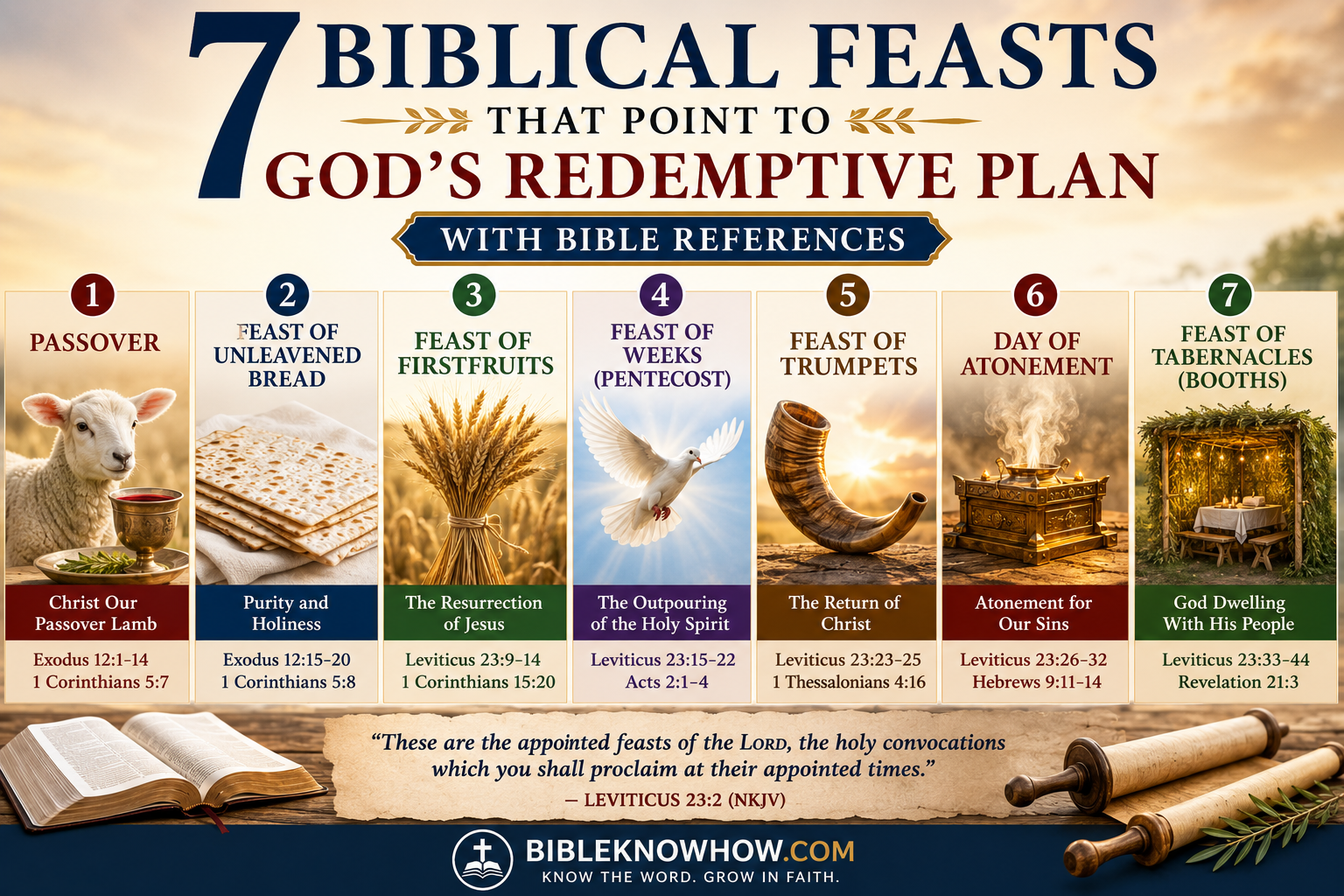
From the earliest pages of Scripture, God established appointed times to teach His people about His holiness, His covenant, and His plan to redeem the world. These sacred celebrations, commonly known as the Seven Biblical Feasts or Feasts of the Lord, were more than annual religious festivals. They served as prophetic signposts, revealing God’s unfolding plan of salvation long before the coming of Jesus Christ.
Recorded primarily in Leviticus 23, these feasts marked Israel’s agricultural seasons, commemorated God’s faithfulness, and called His people to worship and obedience. Yet their significance extends far beyond ancient Israel. Christians recognize that these feasts foreshadow many aspects of Christ’s life, death, resurrection, the gift of the Holy Spirit, and the future hope of His return.
Understanding the biblical feasts helps us appreciate the remarkable unity of Scripture. What began as sacred appointments in the Old Testament finds deeper fulfillment in the New Testament, demonstrating that God’s redemptive plan has been unfolding with purpose from the very beginning.
In this guide, we’ll explore each of the seven biblical feasts, their historical background, key Bible references, and how they point to God’s saving work through Jesus Christ.
What Are the Seven Biblical Feasts?
The seven feasts are God’s appointed festivals given to the nation of Israel.
They are listed in Leviticus 23 and include:
- Passover
- Feast of Unleavened Bread
- Feast of Firstfruits
- Feast of Weeks (Pentecost)
- Feast of Trumpets
- Day of Atonement
- Feast of Tabernacles
These celebrations are often divided into:
Spring Feasts
- Passover
- Unleavened Bread
- Firstfruits
- Pentecost
Fall Feasts
- Trumpets
- Day of Atonement
- Tabernacles
Many Bible teachers observe that the spring feasts were fulfilled in connection with Christ’s first coming, while the fall feasts point forward to events associated with His future return. Christians differ in how they understand the prophetic details, but there is broad agreement that these feasts reveal important aspects of God’s redemptive work.
1. Passover (Pesach)
Primary Bible Reference:
- Exodus 12:1–30
- Leviticus 23:4–5
Historical Background
Passover commemorates God’s deliverance of Israel from slavery in Egypt. Each household sacrificed an unblemished lamb and applied its blood to the doorposts. When the Lord passed through Egypt in judgment, He “passed over” the homes marked by the blood of the lamb.
How It Points to Jesus
The New Testament identifies Jesus as the ultimate Passover Lamb.
Key Scripture:
“For Christ, our Passover lamb, has been sacrificed.” — 1 Corinthians 5:7 (NIV)
Just as the blood of the Passover lamb brought deliverance from judgment, the sacrificial death of Jesus provides forgiveness of sins and reconciliation with God.
Key Lesson
Salvation comes through God’s gracious provision, received by faith.
2. Feast of Unleavened Bread
Primary Bible Reference:
- Leviticus 23:6–8
- Exodus 12:15–20
Historical Background
This seven-day feast immediately followed Passover. During this time, all leaven (yeast) was removed from Israelite homes, symbolizing separation from corruption and impurity.
How It Points to Jesus
Leaven often symbolizes sin in Scripture. Jesus, who lived a completely sinless life, became the perfect sacrifice for humanity.
Believers are also called to leave behind the “old leaven” of sin and pursue holy living.
Key Scripture:
“Let us keep the Festival… with the unleavened bread of sincerity and truth.” — 1 Corinthians 5:8 (NIV)
Key Lesson
God calls His redeemed people to live lives marked by holiness and integrity.
3. Feast of Firstfruits
Primary Bible Reference:
- Leviticus 23:9–14
Historical Background
The Israelites presented the first sheaf of the barley harvest to the Lord as an act of gratitude and trust, acknowledging that every harvest came from Him.
How It Points to Jesus
The resurrection of Jesus is described as the “firstfruits” of those who have died.
Key Scripture:
“But Christ has indeed been raised from the dead, the firstfruits of those who have fallen asleep.” — 1 Corinthians 15:20 (NIV)
His resurrection guarantees the future resurrection of all who belong to Him.
Key Lesson
God’s promises are trustworthy, and Christ’s resurrection assures believers of eternal life.
4. Feast of Weeks (Pentecost)
Primary Bible Reference:
- Leviticus 23:15–22
Historical Background
Celebrated fifty days after Firstfruits, this feast marked the wheat harvest and was a time of thanksgiving for God’s provision.
How It Points to Jesus
In the New Testament, the Holy Spirit was poured out on believers during Pentecost.
Key Scripture:
- Acts 2:1–4
This event marked the beginning of the church’s worldwide mission to proclaim the gospel.
Key Lesson
God empowers His people through the Holy Spirit to live faithfully and bear witness to Christ.
5. Feast of Trumpets (Rosh Hashanah)
Primary Bible Reference:
- Leviticus 23:23–25
Historical Background
The Feast of Trumpets began with the sounding of trumpets, calling the people to gather, worship, and prepare spiritually.
How It Points to God’s Redemptive Plan
Many Christians associate the sounding of trumpets with Christ’s future return and the gathering of God’s people, while recognizing that interpretations of prophetic passages differ among faithful believers.
Related Scriptures:
- 1 Thessalonians 4:16
- 1 Corinthians 15:52
Key Lesson
God’s people are called to live in readiness, faithfully anticipating the fulfillment of His promises.
6. Day of Atonement (Yom Kippur)
Primary Bible Reference:
- Leviticus 16
- Leviticus 23:26–32
Historical Background
The Day of Atonement was Israel’s most solemn annual observance. The high priest entered the Most Holy Place to make atonement for the sins of the nation through sacrifices prescribed by God.
How It Points to Jesus
The New Testament presents Jesus as the perfect High Priest whose once-for-all sacrifice accomplished what repeated animal sacrifices could not.
Key Scripture:
- Hebrews 9:11–14
- Hebrews 10:10–14
Key Lesson
Through Christ’s sacrifice, believers receive complete forgiveness and confident access to God.
7. Feast of Tabernacles (Booths)
Primary Bible Reference:
- Leviticus 23:33–44
Historical Background
For seven days, the Israelites lived in temporary shelters to remember God’s faithful provision during their wilderness journey after the Exodus.
How It Points to God’s Redemptive Plan
The feast celebrates God’s desire to dwell among His people. Christians see this theme fulfilled in Christ, who “became flesh and made His dwelling among us” (John 1:14), and ultimately in the promise that God will dwell with His redeemed people forever (Revelation 21:3).
Key Lesson
God is present with His people, providing guidance, protection, and the hope of eternal fellowship with Him.
Why the Biblical Feasts Still Matter
Although Christians are not required to observe the Old Testament feasts as part of the New Covenant (see Colossians 2:16–17), studying them offers valuable insights into God’s character and His plan of redemption.
The feasts help us:
- Understand the unity of the Old and New Testaments.
- See how God’s promises unfold throughout Scripture.
- Appreciate the significance of Jesus’ life, death, resurrection, and ongoing ministry.
- Recognize God’s faithfulness across generations.
- Grow in worship by seeing the depth and consistency of His redemptive plan.
Summary of the Seven Biblical Feasts
| Feast | Bible Reference | Central Theme | Connection to Christ |
|---|---|---|---|
| Passover | Exodus 12; Leviticus 23:4–5 | Deliverance | Christ, our Passover Lamb |
| Unleavened Bread | Leviticus 23:6–8 | Holiness | Christ’s sinless life and the believer’s call to purity |
| Firstfruits | Leviticus 23:9–14 | Resurrection hope | Christ’s resurrection as the firstfruits |
| Pentecost | Leviticus 23:15–22; Acts 2 | Empowerment | Outpouring of the Holy Spirit |
| Trumpets | Leviticus 23:23–25 | Spiritual readiness | Anticipation of God’s future purposes |
| Day of Atonement | Leviticus 16; 23:26–32 | Forgiveness | Christ’s once-for-all atoning sacrifice |
| Tabernacles | Leviticus 23:33–44 | God’s presence | God dwelling with His people through Christ and ultimately in eternity |
Frequently Asked Questions
Where are the seven biblical feasts found?
The seven feasts are primarily listed in Leviticus 23, with additional details throughout Exodus, Numbers, Deuteronomy, and other Old Testament books.
Did Jesus celebrate the biblical feasts?
Yes. As a faithful Jew living under the Mosaic Law, Jesus participated in several of the feasts recorded in the Gospels.
Do Christians have to celebrate the biblical feasts?
The New Testament teaches that believers are not obligated to observe these feasts as a requirement of the New Covenant (Colossians 2:16–17). However, studying them can deepen our understanding of God’s redemptive plan and the fulfillment found in Christ.
Why are the biblical feasts important?
They reveal God’s covenant faithfulness, illustrate key themes of redemption, and point forward to the saving work of Jesus Christ.
Which feast is associated with the coming of the Holy Spirit?
The Feast of Weeks, also known as Pentecost, is connected with the outpouring of the Holy Spirit in Acts 2.
Final Thoughts
The seven biblical feasts are far more than historical observances. They are God’s appointed reminders of His holiness, His faithfulness, and His desire to redeem a people for Himself. From the blood of the Passover lamb to the hope of God dwelling with His people forever, each feast contributes to the grand story of redemption woven throughout Scripture.
As Christians study these sacred festivals, we gain a richer appreciation for how the Old Testament prepares the way for the New Testament and how God’s promises find their fulfillment in Jesus Christ. Whether you are reading the Bible for the first time or deepening your understanding of biblical theology, the feasts invite you to marvel at God’s wisdom, trust His unfolding plan, and rejoice in the hope He offers through His Son.
