
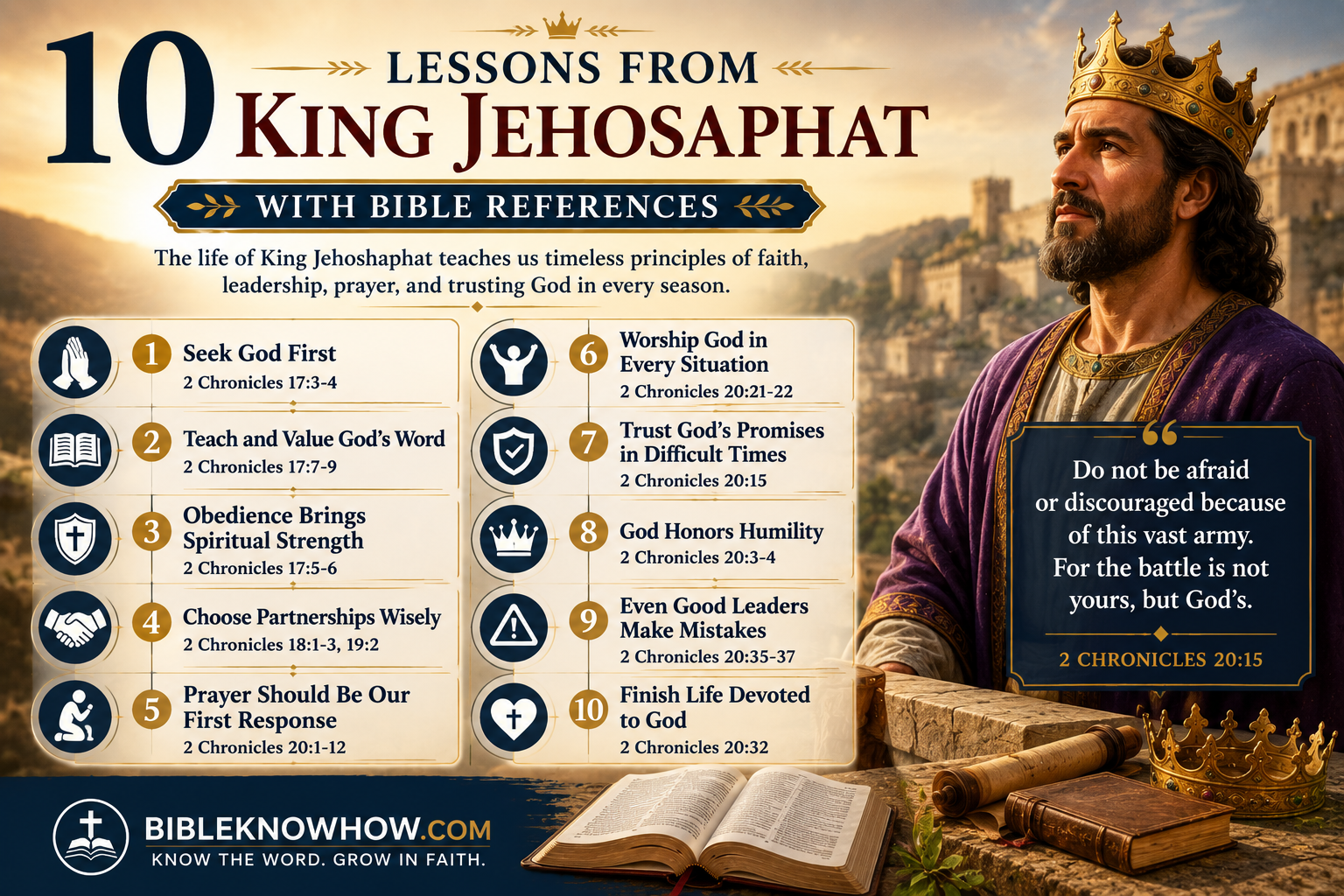
Life often presents challenges that are larger than our own strength—unexpected crises, difficult decisions, spiritual battles, and moments when the future seems uncertain. During such times, the Bible points us to men and women whose lives demonstrate both the blessings of trusting God and the consequences of compromising that trust.
One of those leaders is King Jehoshaphat, the fourth king of Judah after the kingdom divided. His reign is recorded primarily in 1 Kings 22 and 2 Chronicles 17–20. Jehoshaphat was remembered as a king who sought the Lord, promoted the teaching of God’s Word, strengthened justice throughout the land, and experienced remarkable victories because of his faith. At the same time, his life also serves as a cautionary reminder about the dangers of forming unwise alliances and drifting from wholehearted obedience.
Jehoshaphat’s story is compelling because it reflects the reality of the Christian life. He experienced seasons of great faith and moments of poor judgment. Through both his successes and failures, God teaches timeless principles about leadership, worship, dependence on Him, and faithful living.
Read Also: 16 Names of God: Jehovah Shalom (With Scripture Reference and Bible Version)
In this article, we’ll explore 10 practical lessons from King Jehoshaphat, supported by Bible references and practical applications that remain relevant for believers today.
Who Was King Jehoshaphat?
Jehoshaphat was the son of King Asa and ruled the southern kingdom of Judah for approximately twenty-five years.
The Bible describes him as a king who generally followed the ways of David, seeking to honor God and lead the nation in righteousness.
Some of his most notable accomplishments include:
- Removing many pagan practices from Judah.
- Sending officials, priests, and Levites throughout the nation to teach God’s Law.
- Strengthening the nation’s defenses.
- Establishing righteous judges.
- Leading the people in prayer during national crises.
- Trusting God in the face of overwhelming military threats.
His life demonstrates that true leadership begins with a heart devoted to God.
1. Seek God Before Seeking Human Solutions
Bible Reference:
2 Chronicles 17:3–4
“The LORD was with Jehoshaphat because he followed the ways of his father David before him. He did not consult the Baals but sought the God of his father…”
One of the defining characteristics of Jehoshaphat’s reign was his commitment to seeking the Lord.
Rather than adopting the pagan practices of neighboring nations, he intentionally pursued God’s guidance.
Life Lesson
Before making major decisions, cultivate the habit of seeking God through prayer, Scripture, and wise counsel grounded in His Word.
2. God’s Word Should Be Taught and Shared
Bible Reference:
2 Chronicles 17:7–9
Jehoshaphat sent teachers, Levites, and priests throughout Judah with copies of the Book of the Law to instruct the people.
This was one of the earliest examples of organized biblical teaching on a national level.
Why It Matters
Spiritual revival begins with people understanding God’s Word.
Healthy churches, families, and communities are built on biblical truth rather than human opinion.
3. Obedience Brings Spiritual Strength
Bible Reference:
2 Chronicles 17:5–6
As Jehoshaphat walked faithfully with God, the Lord strengthened his kingdom and gave him favor among surrounding nations.
While the Bible does not promise an easy life for those who obey God, it consistently teaches that walking in His ways brings spiritual stability and the blessing of His presence.
Life Lesson
Lasting strength comes from faithful obedience, not from worldly success or personal achievement.
4. Choose Your Partnerships Wisely
Bible Reference:
2 Chronicles 18:1–3
Despite his devotion to God, Jehoshaphat formed an alliance with King Ahab of Israel, one of the most wicked rulers in biblical history.
This decision led him into unnecessary danger and exposed him to ungodly influence.
Later, the prophet Jehu confronted him:
“Should you help the wicked and love those who hate the LORD?” (2 Chronicles 19:2)
Life Lesson
Not every opportunity or partnership is beneficial. Relationships should encourage faithfulness to God rather than compromise.
5. Prayer Should Be Our First Response, Not Our Last Resort
Bible Reference:
2 Chronicles 20:1–12
When Judah faced a vast coalition of enemy armies, Jehoshaphat did not rely solely on military strategy.
Instead, he gathered the nation to seek the Lord in prayer.
He humbly acknowledged:
“We do not know what to do, but our eyes are on You.”
This remains one of the most encouraging prayers recorded in Scripture.
Life Lesson
Faith begins by admitting our dependence on God and bringing our needs before Him.
6. Worship Is a Powerful Expression of Faith
Bible Reference:
2 Chronicles 20:21–22
Before the battle began, Jehoshaphat appointed singers to praise the Lord.
As the people worshiped, God acted on their behalf, bringing confusion among the enemy forces.
This passage does not teach that worship guarantees a particular earthly outcome. Rather, it illustrates that genuine worship expresses trust in God’s sovereignty and faithfulness.
Life Lesson
Choose to worship God even before you see how He will work.
7. Trust God’s Promises During Difficult Seasons
Bible Reference:
2 Chronicles 20:15
The Lord spoke through Jahaziel:
“Do not be afraid or discouraged because of this vast army. For the battle is not yours, but God’s.”
Jehoshaphat believed God’s promise and encouraged the people to stand firm.
Life Lesson
Faith does not eliminate challenges, but it enables us to face them with confidence in God’s presence and power.
8. God Honors Humility
Bible Reference:
2 Chronicles 20:3–4
Jehoshaphat openly admitted his need for God’s help.
Rather than pretending to have all the answers, he led the nation in fasting and prayer.
Life Lesson
Humility invites us to rely on God’s wisdom instead of our own understanding.
9. Even Faithful Believers Can Make Serious Mistakes
Bible Reference:
2 Chronicles 20:35–37
Later in his reign, Jehoshaphat entered another partnership, this time with King Ahaziah.
God warned against the alliance, and the ships they built together were destroyed before completing their mission. So don’t be in a hurry to enter into any partnership without seeking God.
Life Lesson
No believer is beyond the possibility of poor decisions. A faithful life includes learning from mistakes and remaining teachable.
10. Finish Life with Your Heart Devoted to God
Bible Reference:
2 Chronicles 20:32
The Bible summarizes Jehoshaphat’s reign by noting that he walked in the ways of his father Asa and generally did what was right in the eyes of the Lord.
Although his life included failures, his overall direction was one of sincere devotion to God.
Life Lesson
God values a life marked by ongoing faithfulness, repentance, and perseverance rather than flawless performance.
Key Character Qualities of King Jehoshaphat
Jehoshaphat’s life highlights several qualities that remain essential for believers today:
- A heart that seeks God.
- Respect for God’s Word.
- Courage to lead in difficult times.
- Humility in prayer.
- Dependence on God’s guidance.
- Commitment to justice.
- A willingness to worship even in uncertainty.
- Teachability after failure.
These qualities remind us that spiritual maturity is developed through consistent trust and obedience.
Bible References About King Jehoshaphat
If you’d like to study Jehoshaphat’s life in greater detail, begin with these passages:
- 1 Kings 22:41–50 – Overview of his reign.
- 2 Chronicles 17 – His reforms and commitment to God’s Word.
- 2 Chronicles 18 – Alliance with Ahab and the battle at Ramoth Gilead.
- 2 Chronicles 19 – Judicial reforms and prophetic rebuke.
- 2 Chronicles 20 – National prayer, worship, and God’s deliverance.
Reading these chapters together provides a balanced picture of both his strengths and weaknesses.
Frequently Asked Questions
Who was King Jehoshaphat?
Jehoshaphat was the king of Judah and the son of King Asa. He is remembered for seeking the Lord, promoting the teaching of God’s Law, strengthening justice, and trusting God during national crises.
What is King Jehoshaphat best known for?
He is especially known for leading Judah in prayer when a vast enemy army approached and for trusting God’s promise that “the battle is not yours, but God’s” (2 Chronicles 20:15).
What mistakes did Jehoshaphat make?
His most significant mistakes involved forming alliances with ungodly kings such as Ahab and Ahaziah. These decisions brought unnecessary danger and prompted prophetic rebuke.
Why did God bless Jehoshaphat?
Scripture emphasizes that Jehoshaphat sought the Lord, followed His ways, encouraged biblical instruction, and led with humility. God’s blessing reflected His covenant faithfulness to those who walked in obedience.
What can Christians learn from Jehoshaphat today?
Believers can learn the importance of seeking God first, praying in times of uncertainty, valuing Scripture, choosing wise relationships, worshiping in faith, and remaining humble and teachable throughout life.
Final Thoughts
King Jehoshaphat’s life is a powerful reminder that spiritual leadership is not about perfection but about consistently turning toward God. His reign demonstrates the blessings of seeking the Lord, teaching His Word, leading with humility, and trusting Him in the face of overwhelming challenges. At the same time, his unwise alliances reveal how even devoted believers can stumble when they compromise godly wisdom.
For Christians today, Jehoshaphat’s story encourages us to keep our eyes fixed on the Lord, especially when we face decisions beyond our understanding. His famous prayer—“We do not know what to do, but our eyes are on You” (2 Chronicles 20:12)—continues to resonate because it expresses a timeless truth: our greatest strength is found not in our own abilities but in wholehearted dependence on God.
As you reflect on these ten lessons, ask yourself where God may be inviting you to seek Him more earnestly, trust Him more deeply, and walk more faithfully. Like Jehoshaphat, every believer has the opportunity to grow through both victories and failures, becoming a living testimony of God’s grace, wisdom, and faithfulness.
